Would you like to switch to the accessible version of this site?

Go to accessible site Close modal window

Don't need the accessible version of this site?

Hide the accessibility button Close modal window
Accessibility View Close toolbar
Countryside Animal Hospital

Call today:

(419) 882-7688

Open mobile navigation
  • Home
  • Patient Center
    • Online Forms
    • What to Expect
    • Veterinary Resources
    • Payment Options
  • Our Links
  • About Us
    • Services
    • Meet Our Team
  • Careers
  • Petsimonials
  • Iditarod
  • FAQ
    • Pet Surgery/Home Care
    • New Pet
    • Fleas, Tick and Heartworms
    • Dental Care
  • Contact Us
  • Veterinary Topics
    • Pet Health
      • Chronic Conditions
      • Digestive and Oral Health
      • Diseases and Viruses
      • Pests and Parasites
      • Orthopedics
    • Today's Veterinarian
    • Choosing Your Pet
      • Finding Your Pet
      • Cats
      • Dogs
      • Exotics
        • Amphibians
        • Birds
        • Reptiles
          • Lizards
          • Turtles
      • Small Mammals
        • Ferrets
        • Rabbits
        • Domesticated Animals
          • Prairie Dogs
        • Pocket Pets
          • Chinchillas
          • Guinea Pigs
          • Hamsters
          • Hedgehogs
          • Rats
      • Livestock
        • Cows
        • Donkeys, Horses & Mules
        • Goats
        • Pigs
        • Poultry
        • Sheep
    • Living With Your Pet
      • Bringing Your Pet Home
      • Children and Pets
      • Providing Care
      • Travel
      • Saying Goodbye
    • Newsletter Library
      • Cats
      • Tips for Pet Owners
      • Behavior & Training
      • Fleas & Parasites
      • Keeping Pets Healthy
      • Recognizing Illness
      • Nutrition & Food
      • Pet Dangers
      • Seasonal Topics
      • Visiting the Vet
      • Equine
      • Newsletter Archive
        • Fun with Pets
        • Unbelievable Pets
    • Video Newsroom
      • Health Topics
      • Technology and Science
      • Other Interests
    • Newsletter Library
    • Client Survey
    • Pets4Kids
  • The Big Give
  • Home >
  • Articles >
  • Choosing Your Pet >
  • Exotics >
  • Reptiles >
  • Turtles >
  • Red Eared Sliders

Red Eared Sliders

  • Created in Choosing Your Pet, Exotics, Reptiles, Turtles
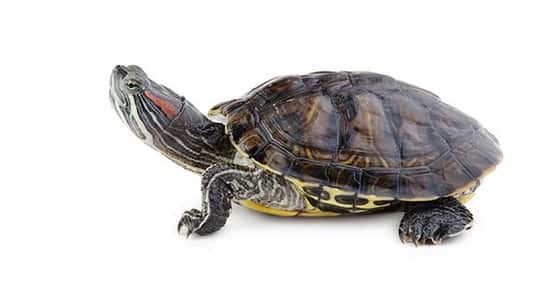
Image of a red eared slider turtle.

Red eared sliders are semi aquatic turtles that are very commonly kept as pets. Unfortunately, lack of understanding what they require means that many red eared sliders have died from improper care. While they are not overly demanding as pets, many unsuspecting owners have been told that it was fine to keep them in small plastic bowls. Needless to say this housing is completely inadequate and impractical - turtle owners need to invest a fair amount in the proper equipment to house red eared sliders. Once housed properly they are quite easy to care for, and with the proper care these turtles can live 75 years or more, so turtle ownership is not a commitment to be taken lightly. A full grown red eared slider can reach 12 inches in length (measured as the carapace, or top shell, length). Males tend to be smaller than females, but have large claws on the front legs and longer tails than females.

In the US, sale of red eared sliders under 4 inches in length have been banned since the 1970s. The ban was a result of the prevalence of Salmonella infections linked to pet turtles. Baby turtles were very popular as pets for small children, mostly because a lot of people did not realize the cute tiny turtles sold in pet stores could carry Salmonella or that they could grow so large.

Diet

Red eared sliders are omnivores, meaning they eat a mixture of animal and plant material. Younger turtles eat more animal protein than adults, though. Juveniles should be fed daily, but adults can be fed every 2-3 days. Turtles can be fed a mixture of prepared commercial food and fresh food. Special food formulated for turtles can be used, but this should not make up any more than 25% of the total diet. Another 25% of the diet should be made up of animal protein, and can include live feeder fish, earthworms, crickets, waxworms, cooked chicken or lean beef, and aquatic snails. Young turtles can be feed smaller feeder items such as blood worms, shrimp, dapnia and krill. The remainder of the diet (up to about 60% of the adult diet) should be made up of fresh greens, vegetable, and fruits. Good choices for greens include collard, mustard and dandelion greens, butter lettuce and other leaf lettuces (but never iceberg lettuce). Carrots (tops are fine too), squash and green beans can be shredded and offered. Fresh fruits can be given too, shredding hard fruit like apples and chopping softer fruits such as bananas and berries. Cantaloupe can be given with the rind on as turtles seem to enjoy gnawing on the rinds.

Vitamins & Minerals

A good quality complete reptile vitamin and mineral supplement should be added to the food once or twice a week. In addition, extra calcium can be provided by giving turtles a cuttlebone (break into pieces and float in the water) or calcium block to nibble on.

Housing

Red eared slider turtles are semi-aquatic and spend a significant amount of time basking, so need a tank that provides both water for swimming and area where they can get out for basking. A 20 gallon tank is considered a minimum, though larger turtles will need a larger tank to provide ample swimming room so even if you have a smaller turtle you might want to invest in a larger tank to allow room to grow. You do not need to use an aquarium though - large plastic containers or storage tubs are fine as long as you don't mind not being able to view the turtles from the side. As long as the tank is tall enough and the basking area is positioned so that the turtles can't climb out you won't need a lid.

The basking area can be provided by stacking smooth rocks, sloping smooth large gravel to one side to make a land area, or using wood (fixed or floating). However you design the tank though, keep in mind that turtles are messy and you will need to clean the tank frequently. No gravel is required in the tank but if you choose to use it make sure it is large enough that it won't be accidentally eaten.

Water & Filters

Red eared sliders need an adequate amount of water to move about and swim a bit. You can judge if there is enough water by looking at the length of your turtle. The water should be at least 1.5 to 2 times as deep as your turtle is long (so a 4 inch turtle should have a minimum depth of 6 inches). The length of the water area should be 4-5 times the length of the turtle, and the width should be at least 2-3 times the length of the turtle.

Between feeding and defecating, turtles are pretty messy creatures. A turtle tank should include a good filtration system such as a power filter or canister filter, or an undergravel filter system. Filtration will reduce the frequency of water changes, but your turtles will still require 25% water changes weekly and a thorough cleaning once a month or more. It is best to feed your turtle in a separate container to minimize the mess in the tank and reduce the load on the filtration system.

Heat

A submersible heater should be used to keep the water at 75-86 degrees F. Get a good aquarium thermometer and monitor the water temperature. Turtles will want to investigate the heater so it is best if you can turtle proof it by placing it behind something so the turtles can't bump or move it.

A heated basking spot should also be provided in the area provided for the turtle to get out of the water. An incandescent bulb or spotlight can serve this purpose, but make sure there is no way the turtle can touch the light or that the light can fall into the water. The temperature at the basking spot should be 85-88 F. Watch the water temperature when the basking light is on as it may heat the water.

The ambient air temperature around the tank should ideally be about 75 F. If the turtle's room is cooler than this you should provide extra heat in the tank area. A ceramic heat element used near the tank works well for this purpose since it can be left on day and night.

Light

In addition to the basking light, a full spectrum reptile UVA/UVB light should be provided. Exposure to UVA/UVB is necessary for proper calcium metabolism, and also appears to have other benefits to overall health such as improving appetite. It is also nice to take your turtle out into natural sunlight in warmer weather.

  • Pet Health
    • Chronic Conditions
    • Digestive and Oral Health
    • Diseases and Viruses
    • Pests and Parasites
    • Orthopedics
  • Today's Veterinarian
  • Choosing Your Pet
    • Finding Your Pet
    • Cats
    • Dogs
    • Exotics
      • Amphibians
      • Birds
      • Reptiles
        • Lizards
        • Turtles
    • Small Mammals
      • Ferrets
      • Rabbits
      • Domesticated Animals
        • Prairie Dogs
      • Pocket Pets
        • Chinchillas
        • Guinea Pigs
        • Hamsters
        • Hedgehogs
        • Rats
    • Livestock
      • Cows
      • Donkeys, Horses & Mules
      • Goats
      • Pigs
      • Poultry
      • Sheep
  • Living With Your Pet
    • Bringing Your Pet Home
    • Children and Pets
    • Providing Care
    • Travel
    • Saying Goodbye
  • Newsletter Library
    • Cats
    • Tips for Pet Owners
    • Behavior & Training
    • Fleas & Parasites
    • Keeping Pets Healthy
    • Recognizing Illness
    • Nutrition & Food
    • Pet Dangers
    • Seasonal Topics
    • Visiting the Vet
    • Equine
    • Newsletter Archive
      • Fun with Pets
      • Unbelievable Pets
  • Video Newsroom
    • Health Topics
    • Technology and Science
    • Other Interests
  • Newsletter Library
  • Client Survey
  • Pets4Kids

Contact Us

We look forward to hearing from you

Error!

    • Make an Appointment

      We will do our best to accommodate your busy schedule. Request an appointment today!
      Request Now
    • Our Services

      We strive to provide complete care for our patients. Learn more about all the services we provide.
      Read More
    • Testimonials

      We have been taking our dogs here since 1988 & we couldn't be happier with the services we have received! Ellison Weber - Sylvania, OH
      Read More

    Office Hours

    Our Regular Schedule

    Countryside Animal Hospital

    Monday:

    8:00AM - 4:00PM

    Tuesday:

    7:00AM - 4:00PM

    Wednesday:

    8:00AM - 6:00PM

    Thursday:

    7:00AM - 4:00PM

    Friday:

    8:00AM - 4:00PM

    Saturday:

    Closed

    Sunday:

    Closed

    Closed

    Location

    Find us on the map

    Testimonial

    • "We have been taking our dogs here since 1988 & we couldn't be happier with the services we have received!"
      Ellison Weber - Sylvania, OH

    Featured Articles

    Read about interesting topics

    • March Newsletter: How to Keep Your Cat Safe When Outdoors

      Wondering how your cat can safely spend time outdoors? ...

      Read More
    • March Newsletter: How to Choose Safe Blankets for Pets

      Do you know how to pick a safe blanket for your pet? ...

      Read More
    • February Newsletter: How to Reduce Dental Anxiety in Pets

      Does your pet hate toothbrushing? These tips could reduce dental anxiety. ...

      Read More
    • February Newsletter: How to Safely Change Your Cat’s Food

      Buying a new food for your cat? Find out how to switch foods safely. ...

      Read More
    • January Newsletter: Signs Your Pet Needs a Wellness Exam

      Does your pet need a wellness exam? ...

      Read More
    • January Newsletter: How Your Veterinarian Can Help If Your Pet Ingests Something Toxic

      Has your pet eaten something it shouldn't have? Find out how your vet can help. ...

      Read More
    • December Newsletter: Signs Your Pet Needs a Professional Cleaning

      Do you know when your pet needs a professional cleaning? ...

      Read More
    • December Newsletter: Simple Ways to Keep Your Home Flea-Free for Your Pet’s Well-being

      Never want to see another flea again? Try these tips for a flea-free home. ...

      Read More
    • November Newsletter: The Importance of Bloodwork for Your Pet’s Health

      Wondering if your pet really needs bloodwork? Find out the benefits of blood tests for your furry friend. ...

      Read More
    • November Newsletter: Turkey Day Tips for Pet Owners

      Don't forget about your pet when making Turkey Day preparations. ...

      Read More

    Newsletter Sign up

    Signup for more articles

    Error!

      • Copyright © 2026 MH Sub I, LLC dba iMatrix.
      • Admin Log In
      • Site Map