Would you like to switch to the accessible version of this site?

Go to accessible site Close modal window

Don't need the accessible version of this site?

Hide the accessibility button Close modal window
Accessibility View Close toolbar
Countryside Animal Hospital

Call today:

(419) 882-7688

Open mobile navigation
  • Home
  • Patient Center
    • Online Forms
    • What to Expect
    • Veterinary Resources
    • Payment Options
  • Our Links
  • About Us
    • Services
    • Meet Our Team
  • Careers
  • Petsimonials
  • Iditarod
  • FAQ
    • Pet Surgery/Home Care
    • New Pet
    • Fleas, Tick and Heartworms
    • Dental Care
  • Contact Us
  • Veterinary Topics
    • Pet Health
      • Chronic Conditions
      • Digestive and Oral Health
      • Diseases and Viruses
      • Pests and Parasites
      • Orthopedics
    • Today's Veterinarian
    • Choosing Your Pet
      • Finding Your Pet
      • Cats
      • Dogs
      • Exotics
        • Amphibians
        • Birds
        • Reptiles
          • Lizards
          • Turtles
      • Small Mammals
        • Ferrets
        • Rabbits
        • Domesticated Animals
          • Prairie Dogs
        • Pocket Pets
          • Chinchillas
          • Guinea Pigs
          • Hamsters
          • Hedgehogs
          • Rats
      • Livestock
        • Cows
        • Donkeys, Horses & Mules
        • Goats
        • Pigs
        • Poultry
        • Sheep
    • Living With Your Pet
      • Bringing Your Pet Home
      • Children and Pets
      • Providing Care
      • Travel
      • Saying Goodbye
    • Newsletter Library
      • Cats
      • Tips for Pet Owners
      • Behavior & Training
      • Fleas & Parasites
      • Keeping Pets Healthy
      • Recognizing Illness
      • Nutrition & Food
      • Pet Dangers
      • Seasonal Topics
      • Visiting the Vet
      • Equine
      • Newsletter Archive
        • Fun with Pets
        • Unbelievable Pets
    • Video Newsroom
      • Health Topics
      • Technology and Science
      • Other Interests
    • Newsletter Library
    • Client Survey
    • Pets4Kids
  • The Big Give
  • Home >
  • Articles >
  • Newsletter Library >
  • Recognizing Illness >
  • Acute Kidney Injury in Dogs

Acute Kidney Injury in Dogs

  • Created in Newsletter Library, Recognizing Illness
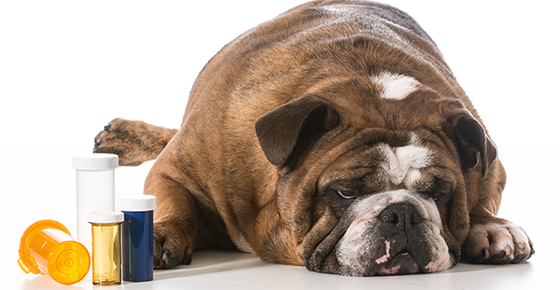
Image of sick dog with empty pill bottles.

Leptospirosis is a bacterial, worldwide disease that can also affect humans. Dogs are usually exposed by contact with the urine of affected animals, often wildlife, or by drinking contaminated water. There is a vaccine that can protect dogs from four strains of Lepto.

Antifreeze toxicity is another common cause of renal damage. Dogs like the sweet taste, and ingesting even a small amount can affect the kidneys. They are often exposed by licking the garage floor where the car radiator has leaked.

Drugs can cause kidney damage; NSAID's, some antibiotics, and heart medications have been incriminated. Non-steroidal anti-inflammatory drugs (NSAID's) can cause renal damage, especially if over dosed. This most frequently happens when a dog, receiving a chewable form for arthritis, chews up and eats the whole bottle of pills! Be sure these bottles are out of reach of all your pets. A class of antibiotics called aminoglycosides can cause kidney damage if over dosed or if the dog is dehydrated. Heart medications can stress the kidneys, as well as the heart disease itself can stress the kidneys. Heart patients on meds will usually have their kidney function checked regularly.

A bad infection of the kidneys called pyelonephritis will cause renal damage. A variety of bacteria can cause this. Cultures of the urine are important to determine which antibiotics are effective, then to assess if and when the infection resolves.

Foods and treats can even cause kidney damage. Raisins, grapes, and currants can cause kidney damage, although the toxin is unknown. It does seem to be from the flesh of the fruit and not the seed. Even just a handful of grapes has sickened dogs.

The chicken jerky treats from China have sickened, and even killed, hundreds of dogs. The FDA has released warnings, but the treats are still available on the market. There has been a great deal of study, and inspection of facilities in China, but the toxin has still not been identified. There are reports that the duck jerky and veggie jerky treats may also cause kidney disease.

Watch for Symptoms

Symptoms of acute kidney disease are vomiting, lethargy, poor appetite or not eating at all, possible diarrhea, not passing urine, or possibly urinating more volume than normal. Depending on the cause, there may be fever and abdominal pain.

Treatment always includes hospitalization and intravenous fluid therapy. Time is critical as the longer the disease process endures, the more kidney tissue damage may occur and may become permanent. If it is possible that your dog ingested antifreeze, call your emergency hospital right away as there is an antidote but it needs to be administered within a few hours. Other treatments, depending on the cause, may include antibiotics and drugs to control nausea.

If you suspect your dog may have developed kidney damage, an examination, blood tests, and urine tests are in order. Your veterinarian can diagnose and treat your dog. Better yet, discuss with your veterinarian methods to try to prevent kidney damage!

Sources:

"Acute Kidney Injury in Dogs of the Central Coast". Colleen Brady, DVM. DACVECC, Pacific Tide newsletter , Volume 2, issue 1.

"Aminoglycosides: Nephrotoxicity". Mingeot-Leclercq and Tullen, Antimicrobial Agents and Chemotherapy, 1999 May; 43 (5) 1003 - 1012

  • Pet Health
    • Chronic Conditions
    • Digestive and Oral Health
    • Diseases and Viruses
    • Pests and Parasites
    • Orthopedics
  • Today's Veterinarian
  • Choosing Your Pet
    • Finding Your Pet
    • Cats
    • Dogs
    • Exotics
      • Amphibians
      • Birds
      • Reptiles
        • Lizards
        • Turtles
    • Small Mammals
      • Ferrets
      • Rabbits
      • Domesticated Animals
        • Prairie Dogs
      • Pocket Pets
        • Chinchillas
        • Guinea Pigs
        • Hamsters
        • Hedgehogs
        • Rats
    • Livestock
      • Cows
      • Donkeys, Horses & Mules
      • Goats
      • Pigs
      • Poultry
      • Sheep
  • Living With Your Pet
    • Bringing Your Pet Home
    • Children and Pets
    • Providing Care
    • Travel
    • Saying Goodbye
  • Newsletter Library
    • Cats
    • Tips for Pet Owners
    • Behavior & Training
    • Fleas & Parasites
    • Keeping Pets Healthy
    • Recognizing Illness
    • Nutrition & Food
    • Pet Dangers
    • Seasonal Topics
    • Visiting the Vet
    • Equine
    • Newsletter Archive
      • Fun with Pets
      • Unbelievable Pets
  • Video Newsroom
    • Health Topics
    • Technology and Science
    • Other Interests
  • Newsletter Library
  • Client Survey
  • Pets4Kids

Contact Us

We look forward to hearing from you

Error!

    • Make an Appointment

      We will do our best to accommodate your busy schedule. Request an appointment today!
      Request Now
    • Our Services

      We strive to provide complete care for our patients. Learn more about all the services we provide.
      Read More
    • Testimonials

      We have been taking our dogs here since 1988 & we couldn't be happier with the services we have received! Ellison Weber - Sylvania, OH
      Read More

    Office Hours

    Our Regular Schedule

    Countryside Animal Hospital

    Monday:

    8:00AM - 4:00PM

    Tuesday:

    7:00AM - 4:00PM

    Wednesday:

    8:00AM - 6:00PM

    Thursday:

    7:00AM - 4:00PM

    Friday:

    8:00AM - 4:00PM

    Saturday:

    Closed

    Sunday:

    Closed

    Closed

    Location

    Find us on the map

    Testimonial

    • "We have been taking our dogs here since 1988 & we couldn't be happier with the services we have received!"
      Ellison Weber - Sylvania, OH

    Featured Articles

    Read about interesting topics

    • March Newsletter: How to Keep Your Cat Safe When Outdoors

      Wondering how your cat can safely spend time outdoors? ...

      Read More
    • March Newsletter: How to Choose Safe Blankets for Pets

      Do you know how to pick a safe blanket for your pet? ...

      Read More
    • February Newsletter: How to Reduce Dental Anxiety in Pets

      Does your pet hate toothbrushing? These tips could reduce dental anxiety. ...

      Read More
    • February Newsletter: How to Safely Change Your Cat’s Food

      Buying a new food for your cat? Find out how to switch foods safely. ...

      Read More
    • January Newsletter: Signs Your Pet Needs a Wellness Exam

      Does your pet need a wellness exam? ...

      Read More
    • January Newsletter: How Your Veterinarian Can Help If Your Pet Ingests Something Toxic

      Has your pet eaten something it shouldn't have? Find out how your vet can help. ...

      Read More
    • December Newsletter: Signs Your Pet Needs a Professional Cleaning

      Do you know when your pet needs a professional cleaning? ...

      Read More
    • December Newsletter: Simple Ways to Keep Your Home Flea-Free for Your Pet’s Well-being

      Never want to see another flea again? Try these tips for a flea-free home. ...

      Read More
    • November Newsletter: The Importance of Bloodwork for Your Pet’s Health

      Wondering if your pet really needs bloodwork? Find out the benefits of blood tests for your furry friend. ...

      Read More
    • November Newsletter: Turkey Day Tips for Pet Owners

      Don't forget about your pet when making Turkey Day preparations. ...

      Read More

    Newsletter Sign up

    Signup for more articles

    Error!

      • Copyright © 2026 MH Sub I, LLC dba iMatrix.
      • Admin Log In
      • Site Map