Would you like to switch to the accessible version of this site?

Go to accessible site Close modal window

Don't need the accessible version of this site?

Hide the accessibility button Close modal window
Accessibility View Close toolbar
Countryside Animal Hospital

Call today:

(419) 882-7688

Open mobile navigation
  • Home
  • Patient Center
    • Online Forms
    • What to Expect
    • Veterinary Resources
    • Payment Options
  • Our Links
  • About Us
    • Services
    • Meet Our Team
  • Careers
  • Petsimonials
  • Iditarod
  • FAQ
    • Pet Surgery/Home Care
    • New Pet
    • Fleas, Tick and Heartworms
    • Dental Care
  • Contact Us
  • Veterinary Topics
    • Pet Health
      • Chronic Conditions
      • Digestive and Oral Health
      • Diseases and Viruses
      • Pests and Parasites
      • Orthopedics
    • Today's Veterinarian
    • Choosing Your Pet
      • Finding Your Pet
      • Cats
      • Dogs
      • Exotics
        • Amphibians
        • Birds
        • Reptiles
          • Lizards
          • Turtles
      • Small Mammals
        • Ferrets
        • Rabbits
        • Domesticated Animals
          • Prairie Dogs
        • Pocket Pets
          • Chinchillas
          • Guinea Pigs
          • Hamsters
          • Hedgehogs
          • Rats
      • Livestock
        • Cows
        • Donkeys, Horses & Mules
        • Goats
        • Pigs
        • Poultry
        • Sheep
    • Living With Your Pet
      • Bringing Your Pet Home
      • Children and Pets
      • Providing Care
      • Travel
      • Saying Goodbye
    • Newsletter Library
      • Cats
      • Tips for Pet Owners
      • Behavior & Training
      • Fleas & Parasites
      • Keeping Pets Healthy
      • Recognizing Illness
      • Nutrition & Food
      • Pet Dangers
      • Seasonal Topics
      • Visiting the Vet
      • Equine
      • Newsletter Archive
        • Fun with Pets
        • Unbelievable Pets
    • Video Newsroom
      • Health Topics
      • Technology and Science
      • Other Interests
    • Newsletter Library
    • Client Survey
    • Pets4Kids
  • The Big Give
  • Home >
  • Articles >
  • Newsletter Library >
  • Keeping Pets Healthy >
  • Pet Dental Care - Tips to Manage Your Pet’s Oral Health

Pet Dental Care - Tips to Manage Your Pet’s Oral Health

  • Created in Newsletter Library, Keeping Pets Healthy

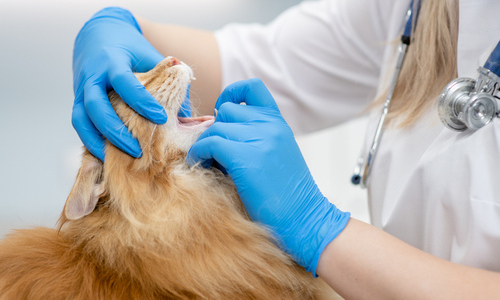
Vet checking cat's teeth

Learn How to Improve Your Pet's Oral Health

How healthy are your pet's pearly whites? Without proper dental care, your furry friend may develop painful infections and even lose teeth. These tips will help you protect your pet's teeth and gums.

Brush Your Pet's Teeth

Brushing removes plaque, a clear bacterial film that constantly coats the teeth. Plaque is a factor in tooth decay, but unlike humans, dogs and cats rarely develop cavities.

Unfortunately, that doesn't mean that it's safe for plaque to remain on their teeth. Plaque turns into tartar if it's not removed within a week or two. Tartar, a hard, yellow deposit, irritates the gums and can cause inflammation and periodontal (gum) disease.

Daily brushing gets rid of plaque, preventing it from ever transforming into tartar. It's never too late to start brushing your cat or dog's teeth. Although it's easier to start brushing when your pet is a puppy or kitten, many older animals will eventually permit you to brush their teeth if you start the process gradually.

You may find brushing is easier if you:

  • Let Your Furry Friend Lick or Smell the Toothpaste. Place a dab of pet toothpaste on your finger or a pet toothbrush and let your cat or dog sniff or lick it. Never use human toothpaste, as the ingredients can be toxic to animals. Pet toothpaste is a much better choice. The toothpaste contains flavors pets find appealing, like chicken, beef, seafood, and peanut.
  • Rub Your Pet's Teeth. Once you've found a toothpaste flavor your pet likes, place a tiny amount on your finger and briefly rub the paste across the gums. Offering a treat when you're through may make teeth cleaning more acceptable to your pet. Keep in mind that you're not actually trying to clean your pet's teeth at this point. Rubbing the gums with the paste helps your furry friend adjust to the sensation of brushing.
  • Try Brushing When Your Pet Is Comfortable. Squirt a pea-sized amount of toothpaste on a pet toothbrush or a finger brush, and gently brush your pet's teeth and gum line using a circular motion. Although both types of brushes remove plaque, a traditional toothbrush may be more effective in removing plaque at the gum line.

Patience is a must when you're starting an oral hygiene routine. It may take a week or two until you can progress from one step to another.

Choose Tooth-Friendly Foods and Treats

Some types of foods, treats, gels, sprays, and additives are specially formulated to prevent plaque and tartar build-up. Talk to your pet's veterinarian about the best foods and products for good oral health.

Schedule Checkups and Teeth Cleanings

Your oral health would suffer if you never saw the dentist or had your teeth cleaned. Pets need checkups and cleanings too. During your pet's exam, the veterinarian will look for signs of trouble, such as broken teeth, swollen or receding gums, bleeding, or loose teeth. Your vet may also recommend X-rays, as some tooth problems may not be obvious.

Teeth cleaning, recommended at least once a year, reduces your pet's risk of developing periodontal disease. The disease can cause bad breath, make chewing painful, and may infect or damage gum tissue, bones, ligaments, and teeth. If gum disease isn't treated, your pet's teeth may even fall out.

Periodontal disease may also increase the likelihood that your dog or cat will develop diabetes, or kidney, liver, or heart disease. According to an article in Today's Veterinary Practice, 80 percent of dogs and 70 percent of cats have some form of periodontal disease by age 2. Among dogs, toy and small breeds are most likely to develop the disease.

Although brushing your pet's teeth removes plaque above the gum line, plaque and tartar may still be present below the gums. A dental cleaning is the only way to remove the substances from under the gums.

Dental cleanings are performed under anesthesia. Blood tests are required before cleanings to ensure that your pet is in good health and can tolerate the anesthesia. Cleanings offer a simple, safe way to protect your pet's oral and general health.

Oral care is an essential aspect of good health. Let us know if your pet is due for a cleaning or you're concerned about tooth or gum problems.

Sources:

American Animal Hospital Association: 10 Facts You Need to Know to Protect Your Pet’s Oral (and Overall!) Health

AVMA: Pet Dental Care

Tufts Now: Chew on This, 12/10/20

Today’s Veterinary Practice: Periodontal Disease: Utilizing Current Information to Improve Client Compliance

  • Pet Health
    • Chronic Conditions
    • Digestive and Oral Health
    • Diseases and Viruses
    • Pests and Parasites
    • Orthopedics
  • Today's Veterinarian
  • Choosing Your Pet
    • Finding Your Pet
    • Cats
    • Dogs
    • Exotics
      • Amphibians
      • Birds
      • Reptiles
        • Lizards
        • Turtles
    • Small Mammals
      • Ferrets
      • Rabbits
      • Domesticated Animals
        • Prairie Dogs
      • Pocket Pets
        • Chinchillas
        • Guinea Pigs
        • Hamsters
        • Hedgehogs
        • Rats
    • Livestock
      • Cows
      • Donkeys, Horses & Mules
      • Goats
      • Pigs
      • Poultry
      • Sheep
  • Living With Your Pet
    • Bringing Your Pet Home
    • Children and Pets
    • Providing Care
    • Travel
    • Saying Goodbye
  • Newsletter Library
    • Cats
    • Tips for Pet Owners
    • Behavior & Training
    • Fleas & Parasites
    • Keeping Pets Healthy
    • Recognizing Illness
    • Nutrition & Food
    • Pet Dangers
    • Seasonal Topics
    • Visiting the Vet
    • Equine
    • Newsletter Archive
      • Fun with Pets
      • Unbelievable Pets
  • Video Newsroom
    • Health Topics
    • Technology and Science
    • Other Interests
  • Newsletter Library
  • Client Survey
  • Pets4Kids

Contact Us

We look forward to hearing from you

Error!

    • Make an Appointment

      We will do our best to accommodate your busy schedule. Request an appointment today!
      Request Now
    • Our Services

      We strive to provide complete care for our patients. Learn more about all the services we provide.
      Read More
    • Testimonials

      We have been taking our dogs here since 1988 & we couldn't be happier with the services we have received! Ellison Weber - Sylvania, OH
      Read More

    Office Hours

    Our Regular Schedule

    Countryside Animal Hospital

    Monday:

    8:00AM - 4:00PM

    Tuesday:

    7:00AM - 4:00PM

    Wednesday:

    8:00AM - 6:00PM

    Thursday:

    7:00AM - 4:00PM

    Friday:

    8:00AM - 4:00PM

    Saturday:

    Closed

    Sunday:

    Closed

    Closed

    Location

    Find us on the map

    Testimonial

    • "We have been taking our dogs here since 1988 & we couldn't be happier with the services we have received!"
      Ellison Weber - Sylvania, OH

    Featured Articles

    Read about interesting topics

    • March Newsletter: How to Keep Your Cat Safe When Outdoors

      Wondering how your cat can safely spend time outdoors? ...

      Read More
    • March Newsletter: How to Choose Safe Blankets for Pets

      Do you know how to pick a safe blanket for your pet? ...

      Read More
    • February Newsletter: How to Reduce Dental Anxiety in Pets

      Does your pet hate toothbrushing? These tips could reduce dental anxiety. ...

      Read More
    • February Newsletter: How to Safely Change Your Cat’s Food

      Buying a new food for your cat? Find out how to switch foods safely. ...

      Read More
    • January Newsletter: Signs Your Pet Needs a Wellness Exam

      Does your pet need a wellness exam? ...

      Read More
    • January Newsletter: How Your Veterinarian Can Help If Your Pet Ingests Something Toxic

      Has your pet eaten something it shouldn't have? Find out how your vet can help. ...

      Read More
    • December Newsletter: Signs Your Pet Needs a Professional Cleaning

      Do you know when your pet needs a professional cleaning? ...

      Read More
    • December Newsletter: Simple Ways to Keep Your Home Flea-Free for Your Pet’s Well-being

      Never want to see another flea again? Try these tips for a flea-free home. ...

      Read More
    • November Newsletter: The Importance of Bloodwork for Your Pet’s Health

      Wondering if your pet really needs bloodwork? Find out the benefits of blood tests for your furry friend. ...

      Read More
    • November Newsletter: Turkey Day Tips for Pet Owners

      Don't forget about your pet when making Turkey Day preparations. ...

      Read More

    Newsletter Sign up

    Signup for more articles

    Error!

      • Copyright © 2026 MH Sub I, LLC dba iMatrix.
      • Admin Log In
      • Site Map