Would you like to switch to the accessible version of this site?

Go to accessible site Close modal window

Don't need the accessible version of this site?

Hide the accessibility button Close modal window
Accessibility View Close toolbar
Countryside Animal Hospital

Call today:

(419) 882-7688

Open mobile navigation
  • Home
  • Patient Center
    • Online Forms
    • What to Expect
    • Veterinary Resources
    • Payment Options
  • Our Links
  • About Us
    • Services
    • Meet Our Team
  • Careers
  • Petsimonials
  • Iditarod
  • FAQ
    • Pet Surgery/Home Care
    • New Pet
    • Fleas, Tick and Heartworms
    • Dental Care
  • Contact Us
  • Veterinary Topics
    • Pet Health
      • Chronic Conditions
      • Digestive and Oral Health
      • Diseases and Viruses
      • Pests and Parasites
      • Orthopedics
    • Today's Veterinarian
    • Choosing Your Pet
      • Finding Your Pet
      • Cats
      • Dogs
      • Exotics
        • Amphibians
        • Birds
        • Reptiles
          • Lizards
          • Turtles
      • Small Mammals
        • Ferrets
        • Rabbits
        • Domesticated Animals
          • Prairie Dogs
        • Pocket Pets
          • Chinchillas
          • Guinea Pigs
          • Hamsters
          • Hedgehogs
          • Rats
      • Livestock
        • Cows
        • Donkeys, Horses & Mules
        • Goats
        • Pigs
        • Poultry
        • Sheep
    • Living With Your Pet
      • Bringing Your Pet Home
      • Children and Pets
      • Providing Care
      • Travel
      • Saying Goodbye
    • Newsletter Library
      • Cats
      • Tips for Pet Owners
      • Behavior & Training
      • Fleas & Parasites
      • Keeping Pets Healthy
      • Recognizing Illness
      • Nutrition & Food
      • Pet Dangers
      • Seasonal Topics
      • Visiting the Vet
      • Equine
      • Newsletter Archive
        • Fun with Pets
        • Unbelievable Pets
    • Video Newsroom
      • Health Topics
      • Technology and Science
      • Other Interests
    • Newsletter Library
    • Client Survey
    • Pets4Kids
  • The Big Give
  • Home >
  • Articles >
  • Newsletter Library >
  • November Newsletter: What Causes Cataracts in Cats and How Are They Treated?

November Newsletter: What Causes Cataracts in Cats and How Are They Treated?

  • Created in Newsletter Library

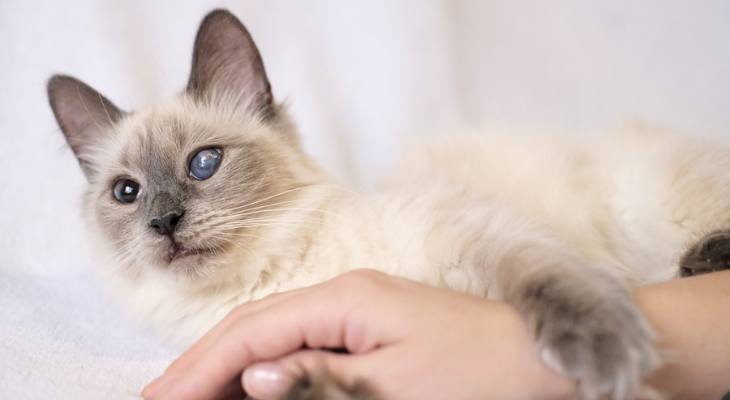
Cat with cataracts holds on to owner's arm.

Is Your Cat Bumping Into the Walls? Cataracts Could Be the Problem

Could you find your way from the kitchen to bathroom wearing a pair of glasses smeared with grease? Unfortunately, the world can look this hazy to cats that have cataracts. Although cataracts are often associated with aging, this eye problem can also affect younger cats.

What Are Cataracts?

Cataracts occur when the clear lens inside your cat's eye becomes cloudy. The lens focuses light rays on the retina, the part of the eye that converts the rays into electrical impulses. Impulses then travel to the brain for conversion to images. If the lens is cloudy, light doesn't reach the retina uniformly, causing hazy or blurry vision.

Small cataracts may not affect your pet's vision very much, while large cataracts can have a significant impact on your pet's eyesight. Your veterinarian may use one of these classifications for your cat's cataracts:

  • Incipient. The cataract only affects a small portion of the lens and doesn't interfere with vision.
  • Immature. This type of cataract causes vision problems and covers 15 to 100% of the lens, according to All About Vision.
  • Mature. Mature cataracts make it difficult or impossible to see because the cataract affects the entire lens.
  • Hypermature. A hypermature cataract has started to shrink, due to the loss of water and protein.

Some cats are born with cataracts or have a genetic predisposition to develop them. Genetic cataracts are more likely to affect certain breeds, such as Himalayan, Persian, British Shorthair, and Birman cats, according to Cats.com.

What Are the Signs of Cataracts?

Due to cataract-related changes in vision, your cat may:

  • Bump Into Furniture and Other Objects
  • Eliminate Waste Next to or Near the Litterbox Instead of In It
  • Struggle to Locate Food and Water Bowls
  • Become More Cautious or Timid When Walking
  • Have Difficulty Climbing Stairs or Jumping on Objects
  • Seem Confused or Disoriented

Although cataracts often don't have any obvious signs, your pet's pupils might look cloudy or appear white or blue-gray instead of black in some cases.

What Causes Cataracts?

Just like people, cats are more likely to develop cataracts as they get older. Other cataract causes include:

  • An Eye Injury
  • Poor Nutrition
  • High Blood Pressure
  • Diabetes or Other Metabolic Diseases
  • An Eye Infection
  • Cancer

Uveitis, inflammation in the middle of the eye, is a common cause of cataracts in cats. Cats that have uveitis may blink or squint often. If you notice any of these signs in your cat, call the veterinarian immediately. Treating the inflammation as soon as possible will protect your pet's vision and reduce it's risk of developing cataracts.

How Are Cataracts Treated?

If inflammation or infection is to blame for your cat's cataracts, the veterinarian will prescribe eye drops that decrease inflammation or kill the germs causing the infection. Prompt treatment of inflammation is important, as inflammation can be a factor in glaucoma. Glaucoma occurs when the pressure inside the eye is too high. High pressure can damage the optic nerve, the pathway between the brain and eye, and cause permanent vision loss. Although eye drops treat inflammation and infection, your cat will still have cataracts.

It's important to treat other underlying diseases and conditions like cancer, high blood pressure, and diabetes. Treating the condition will improve your pet's health, but won't get rid of the cataracts.

No matter what the cause of your cat's cataracts is, your veterinarian may recommend surgery if your pet is having trouble seeing. During cataract surgery, a veterinarian removes the cloudy lens and replaces it with an artificial lens. Surgery isn't an option for all cats, as animals must be healthy enough to tolerate a surgical procedure. As part of the pre-surgery preparation, your veterinarian will order a blood test. The blood test can detect kidney disease and other diseases and conditions that may affect your pet's health.

Surgery isn't always needed for cataracts. If the cataract doesn't affect your pet's eyesight, your veterinarian may suggest watching and waiting. Should the cataract grow larger, surgery may be the best option at that point.

Are you worried that your cat may have cataracts? A trip to the veterinarian can help you determine why your pet's behavior has changed. Contact our office to schedule your furry friend's appointment.

Sources:

All About Vision: Cat Cataracts: Causes, Symptoms, Treatment and Prevention, 10/13/2021

https://www.allaboutvision.com/resources/human-interest/cataracts-in-cats/

Cats.com: Cataracts in Cats: Causes, Symptoms & Treatments, 4/17/2023

https://cats.com/cataracts-in-cats

Cornell University College of Veterinary Medicine: Feline Cataracts

https://www.vet.cornell.edu/departments-centers-and-institutes/cornell-feline-health-center/health-information/feline-health-topics/feline-cataracts

PetMD: Cataracts in Cats, 5/19/2023

https://www.petmd.com/cat/conditions/eyes/cataracts-cats

  • Pet Health
    • Chronic Conditions
    • Digestive and Oral Health
    • Diseases and Viruses
    • Pests and Parasites
    • Orthopedics
  • Today's Veterinarian
  • Choosing Your Pet
    • Finding Your Pet
    • Cats
    • Dogs
    • Exotics
      • Amphibians
      • Birds
      • Reptiles
        • Lizards
        • Turtles
    • Small Mammals
      • Ferrets
      • Rabbits
      • Domesticated Animals
        • Prairie Dogs
      • Pocket Pets
        • Chinchillas
        • Guinea Pigs
        • Hamsters
        • Hedgehogs
        • Rats
    • Livestock
      • Cows
      • Donkeys, Horses & Mules
      • Goats
      • Pigs
      • Poultry
      • Sheep
  • Living With Your Pet
    • Bringing Your Pet Home
    • Children and Pets
    • Providing Care
    • Travel
    • Saying Goodbye
  • Newsletter Library
    • Cats
    • Tips for Pet Owners
    • Behavior & Training
    • Fleas & Parasites
    • Keeping Pets Healthy
    • Recognizing Illness
    • Nutrition & Food
    • Pet Dangers
    • Seasonal Topics
    • Visiting the Vet
    • Equine
    • Newsletter Archive
      • Fun with Pets
      • Unbelievable Pets
  • Video Newsroom
    • Health Topics
    • Technology and Science
    • Other Interests
  • Newsletter Library
  • Client Survey
  • Pets4Kids

Contact Us

We look forward to hearing from you

Error!

    • Make an Appointment

      We will do our best to accommodate your busy schedule. Request an appointment today!
      Request Now
    • Our Services

      We strive to provide complete care for our patients. Learn more about all the services we provide.
      Read More
    • Testimonials

      We have been taking our dogs here since 1988 & we couldn't be happier with the services we have received! Ellison Weber - Sylvania, OH
      Read More

    Office Hours

    Our Regular Schedule

    Countryside Animal Hospital

    Monday:

    8:00AM - 4:00PM

    Tuesday:

    7:00AM - 4:00PM

    Wednesday:

    8:00AM - 6:00PM

    Thursday:

    7:00AM - 4:00PM

    Friday:

    8:00AM - 4:00PM

    Saturday:

    Closed

    Sunday:

    Closed

    Closed

    Location

    Find us on the map

    Testimonial

    • "We have been taking our dogs here since 1988 & we couldn't be happier with the services we have received!"
      Ellison Weber - Sylvania, OH

    Featured Articles

    Read about interesting topics

    • March Newsletter: How to Keep Your Cat Safe When Outdoors

      Wondering how your cat can safely spend time outdoors? ...

      Read More
    • March Newsletter: How to Choose Safe Blankets for Pets

      Do you know how to pick a safe blanket for your pet? ...

      Read More
    • February Newsletter: How to Reduce Dental Anxiety in Pets

      Does your pet hate toothbrushing? These tips could reduce dental anxiety. ...

      Read More
    • February Newsletter: How to Safely Change Your Cat’s Food

      Buying a new food for your cat? Find out how to switch foods safely. ...

      Read More
    • January Newsletter: Signs Your Pet Needs a Wellness Exam

      Does your pet need a wellness exam? ...

      Read More
    • January Newsletter: How Your Veterinarian Can Help If Your Pet Ingests Something Toxic

      Has your pet eaten something it shouldn't have? Find out how your vet can help. ...

      Read More
    • December Newsletter: Signs Your Pet Needs a Professional Cleaning

      Do you know when your pet needs a professional cleaning? ...

      Read More
    • December Newsletter: Simple Ways to Keep Your Home Flea-Free for Your Pet’s Well-being

      Never want to see another flea again? Try these tips for a flea-free home. ...

      Read More
    • November Newsletter: The Importance of Bloodwork for Your Pet’s Health

      Wondering if your pet really needs bloodwork? Find out the benefits of blood tests for your furry friend. ...

      Read More
    • November Newsletter: Turkey Day Tips for Pet Owners

      Don't forget about your pet when making Turkey Day preparations. ...

      Read More

    Newsletter Sign up

    Signup for more articles

    Error!

      • Copyright © 2026 MH Sub I, LLC dba iMatrix.
      • Admin Log In
      • Site Map